
Day 1. Let’s see what happens when I tell an AI to build me a game.
The Prompt#
I started with this:
“I want to create a web based platformer with 10 levels”
That’s it. That was the entire creative direction.
How It Was Built#
This was one of the first projects I used Watchfire for. I gave it the single prompt and it broke the work down into 21 separate tasks:
- Project setup and game canvas
- Game engine core with game loop and rendering
- Player character with movement and animations
- Physics and collision detection
- Platform and obstacle system
- Level system with loader and camera
- Easy levels (1-3)
- Medium levels (4-6) with hazards
- Hard levels (7-10)
- UI/HUD system
- Game states and menus
- Audio system with 8-bit sound effects and music
- Polish, save system, touch controls
Then came the bug reports: browser compatibility fix, restructuring for deployment, and several gameplay bugs I caught while playtesting.
I didn’t sit there approving every file change. Watchfire queued up the tasks and worked through them. I came back to a working game and then playtested it.
What I Got#
I was not expecting this.
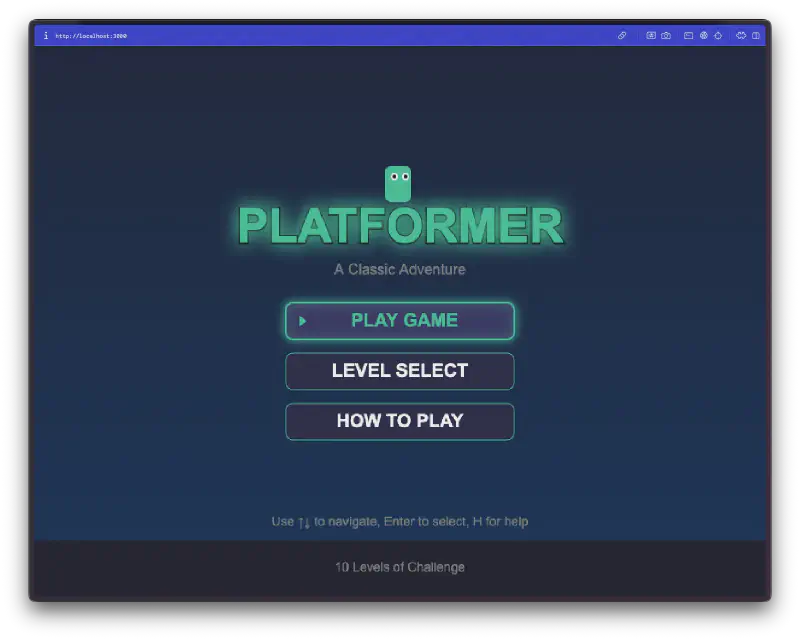
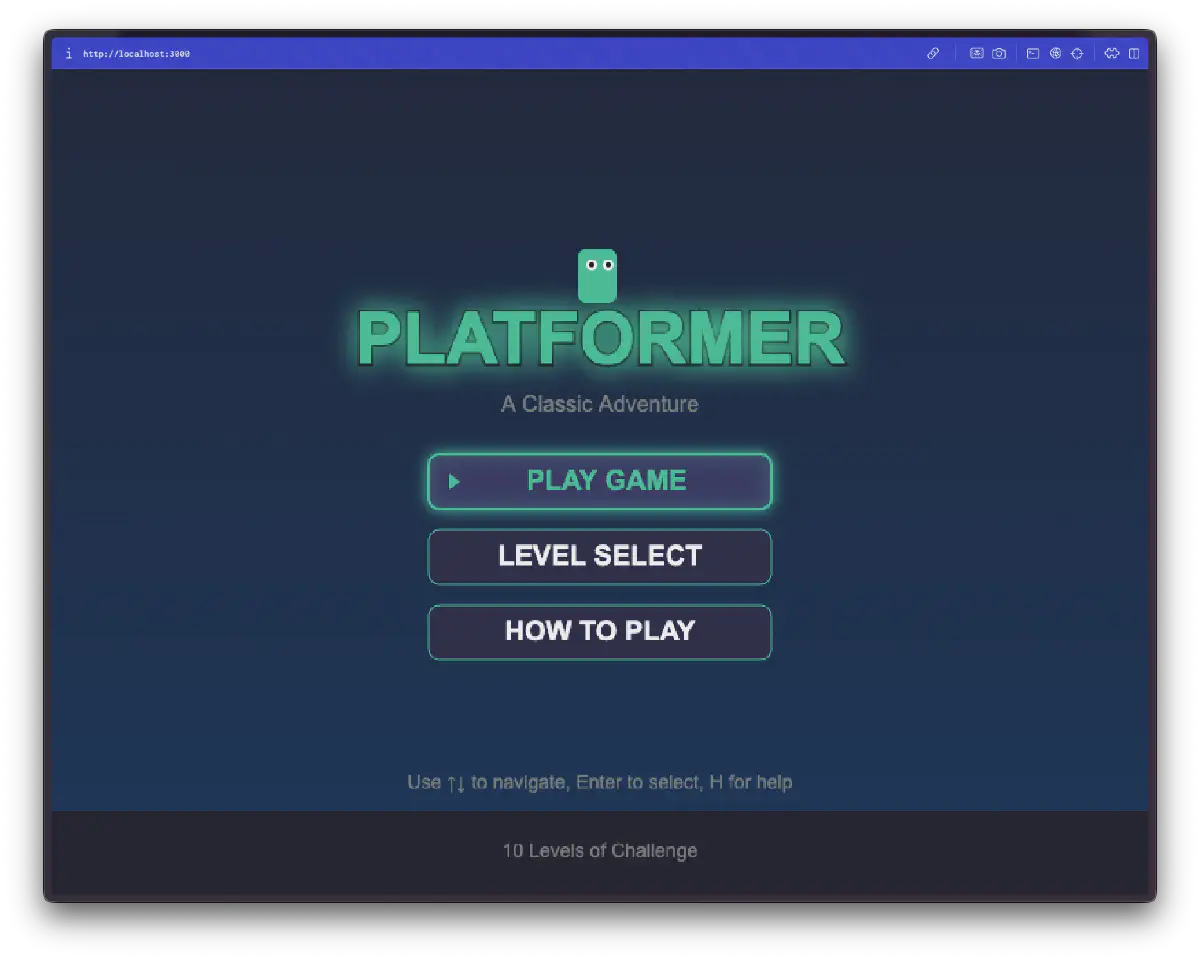
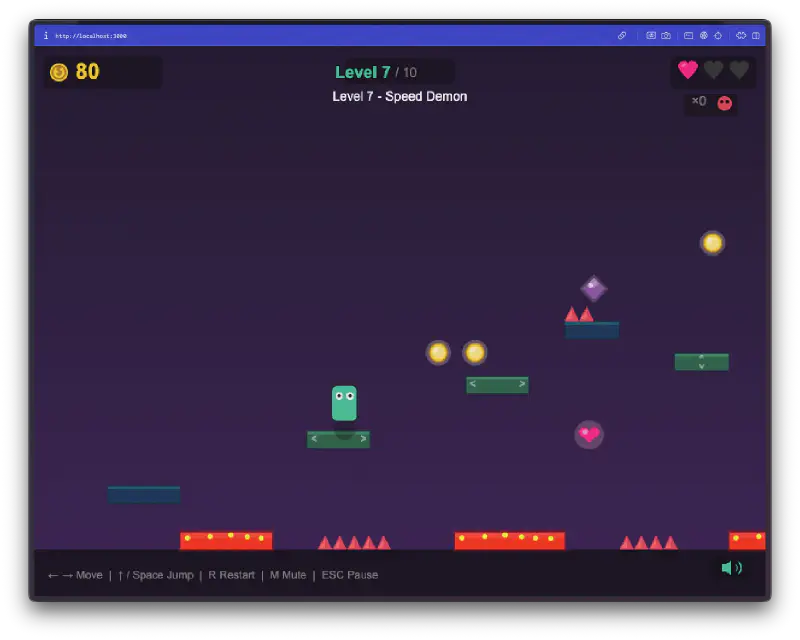
It has actual graphics. Not placeholder squares. There’s a little character with eyes, platforms with different colors, particle effects when you land. The whole thing has a cohesive visual style that I definitely didn’t specify.
It has music. 8-bit background music that loops while you play. I never asked for audio. It just added it.
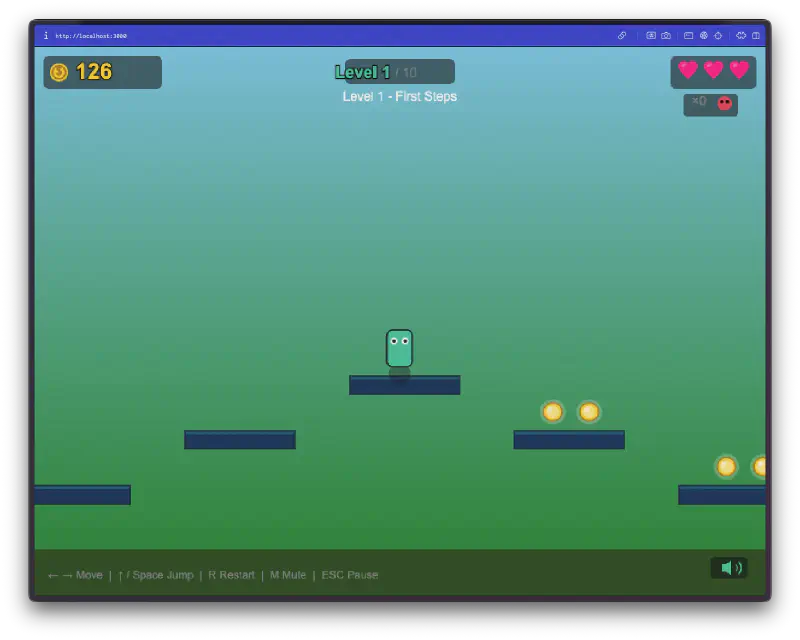
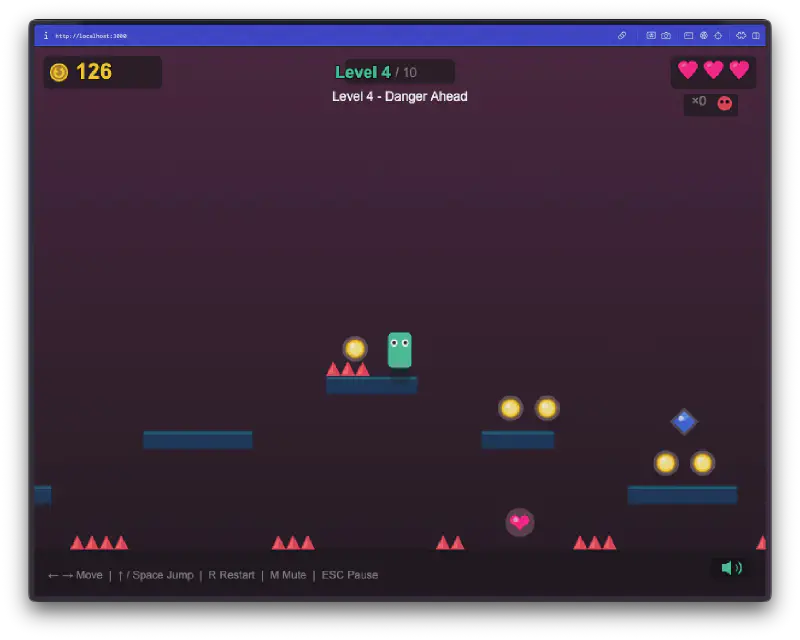
The levels actually get harder. Level 1 is a gentle tutorial called “First Steps.” By level 4, there are spikes (“Danger Ahead”). Level 7 is called “Speed Demon.” The difficulty curve exists and makes sense.
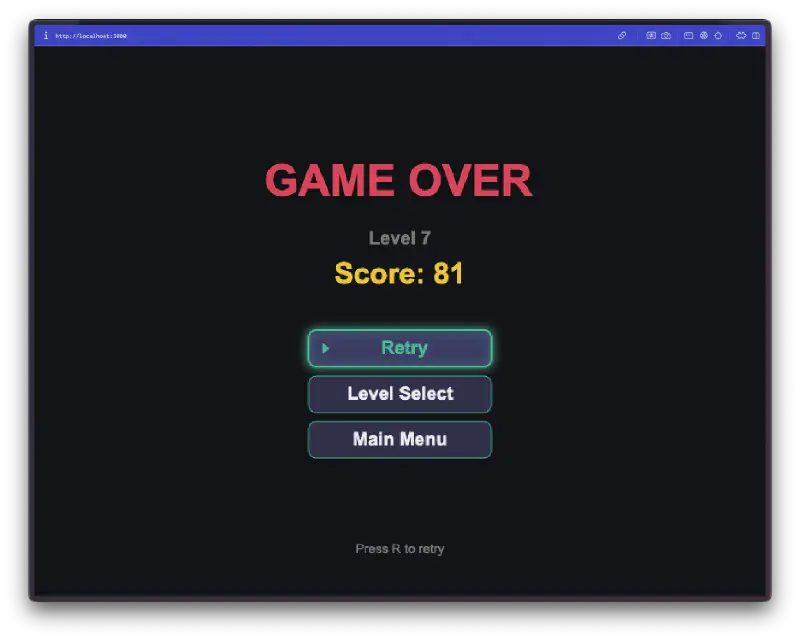
There’s a full menu system. Main menu, level select, pause screen, game over screen, level complete screen. I can pick any level I’ve unlocked. This is way more polished than what I asked for.
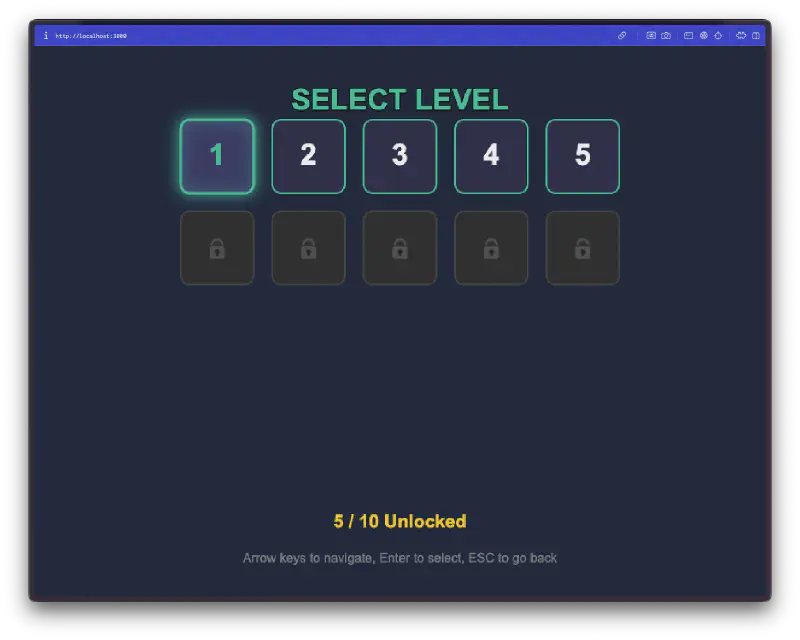
It saves my progress. Close the browser, come back later, my unlocked levels are still there. localStorage persistence that I didn’t ask for.
18 modules. GameEngine, Player, Physics, Camera, LevelLoader, LevelManager, ParticleSystem, AudioManager, SaveManager, TouchControls… it built a proper architecture with separation of concerns. Each module has a clear responsibility. I didn’t specify any of this.
The Bug Reports#
It wasn’t perfect on the first try. I had to playtest and report issues:
- “Only see a blue box” (browser compatibility, needed a roundRect polyfill)
- “Level doesn’t end when I reach the flag”
- “Player keeps moving right when I start the next level”
- “Level select always loads level 1”
- “Music is too repetitive”
Simple descriptions. I didn’t debug anything myself, just described what I saw. The fixes came back and worked.
The Numbers#
- 18 game modules with clear separation of concerns
- 10 levels with JSON-based level definitions
- ~3,500 lines of vanilla JavaScript (no framework for the game itself)
- 21 Watchfire tasks from initial setup to final bug fixes
- Total hands-on time: maybe 30 minutes of playtesting and writing bug reports
Try It#
Arrow keys or WASD to move, space to jump. Works on mobile too.
Day 1 Verdict#
One sentence prompt. A complete game with 10 levels, music, menus, and a save system.
Here’s the thing: I haven’t written a game engine in over a decade — not since university. I’d forgotten everything about collision detection and level progression systems. I couldn’t have built this myself. Not in a day, probably not in a week.
Is this the best platformer ever made? Not even close. But it exists. It works. People can play it. And it took me a couple of hours instead of weeks. That’s what changed. The cost of producing something this complex just dropped dramatically. And if I wanted to, I could keep polishing it, adding levels, improving the physics. The starting point is no longer a blank file.
I think this will be a pattern across all 30 projects. I’m not going to build the best version of anything. But I’m going to build a working version of things I couldn’t have built before, and I’m going to do it fast.
This is day 1 of 30 Days of Vibe Coding. Follow along as I ship 30 projects in 30 days using AI-assisted coding.